
Welcome to Retrocode Magazine
What we're all about, and what you can expect from us.


Retrocode Magazine is an upcoming retro-programming and hobbyist editorial, where we attempt to uncover and demystify the nuances of old school programming. Whilst the majority of our content is, by necessity, aimed squarely at the nuts and bolts of the digital machine, we take pride in making this material as accessible as possible for both seasoned developer and novice alike. Much like building a house, our bottom-up approach is specifically crafted to enable one post to serve as a foundation for the next.
As 8/16-bit computers are relatively slow by today’s standards, it is commonplace, if not essential, for retro programmers to employ machine code in order to leverage a reasonable level of performance from the underlying hardware. Furthermore, as machine code does not exhibit the same software/hardware abstraction as high-level development systems, retro-programming is typically a multidisciplinary endeavour spanning both software development and hardware design. Consequently, due to this somewhat eclectic mix of skills, learning machine code for the first time is often more akin to dry stone walling than modern construction: we begin by piling one stone on top of another, and then fill in the gaps when and where they appear.
Therefore, in an effort to consolidate the gaps and make this process as cohesive as possible, we’ve finally settled upon the following programme for our first series of substack posts:
Bare Metal
A series of posts discussing the whys and wherefores of digital computing. Starting at the very bottom, this foundational series discusses why the binary paradigm has become so pervasive in recent times, and how we’ve managed to leverage the humble switch in order to build some of the most complex machines ever devised.
CPU Workshop
Unlike the majority of tutorials which aspire to teach machine code within the context of a propriety architecture (i.e. Commodore 64, Spectrum, Amiga, PC, etc), we adopt a more homogeneous approach by examining each of the common dialects within our custom-designed CPU simulator suite.
Amongst others, we’ll be taking an in-depth look at the Z80, 6502, 6809, 68000 and 8088/8086 processors.
CONN-X
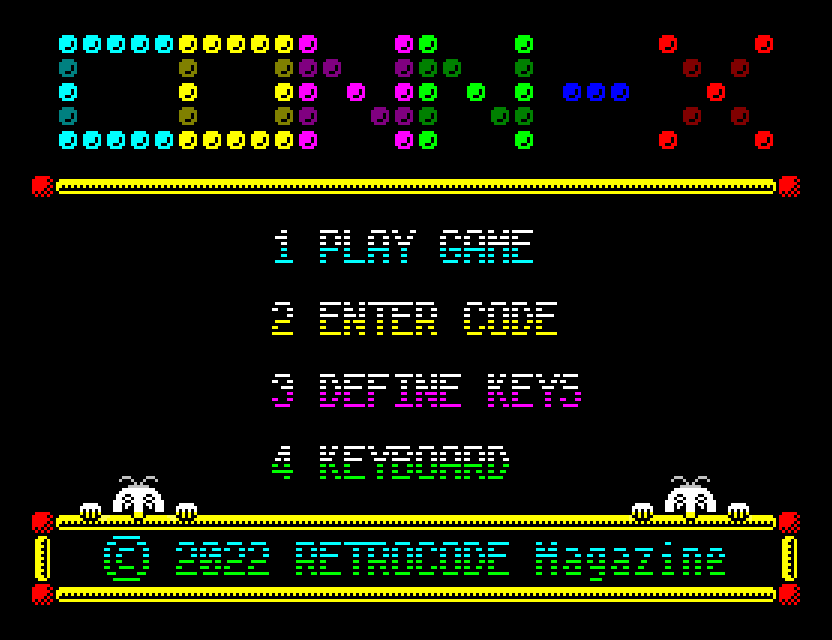
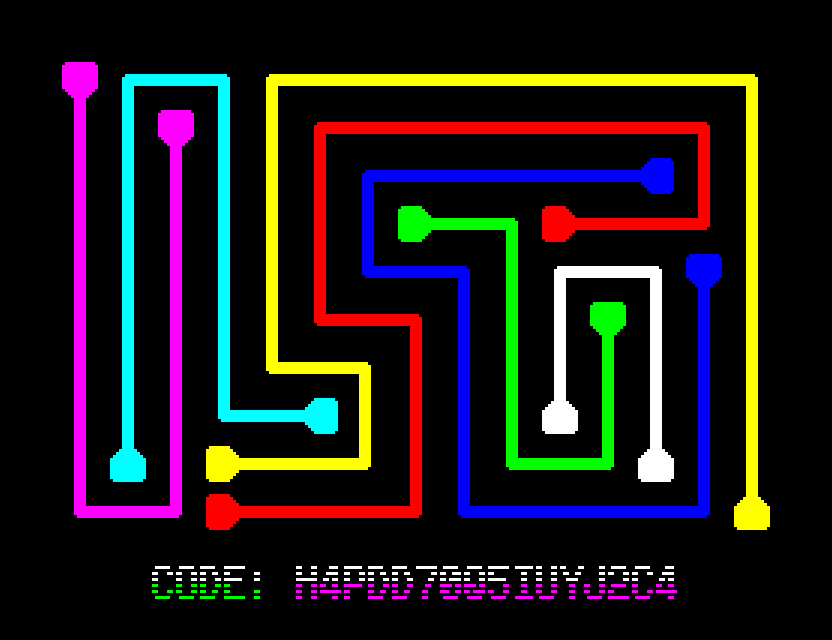
Upon completion of the initial CPU Workshops, we shall endeavour to develop our CONN-X game concept across a plethora of popular retro-platforms, including the ZX Spectrum (Z80), Commodore 64 (6502/10), Dragon 32/Tandy CoCo (6809), Commodore Amiga (68000), and MS-DOS PC (8088/8086)*.
Where appropriate, each CONN-X port will also include chip/beeper sound support and a custom tape/disk loader routine.
*Other platforms will eventually follow, but these machines were primarily chosen due to their popularity.
Additional retro related articles will also be interspersed over the coming months, including C/SDL development, COBOL, essential algorithms, electronics, and BBS door programming. So, if this sounds like something you’d be interested in, then why not subscribe, share, and simply wait for the articles to drop into your mailbox?
Positive or negative, feedback is feedback, and nothing is likely to improve the quality of a publication more than its reader’s opinions.
We’ve placed our success firmly into your hands: if you like what you see here, sharing and subscribing are singularly the best way to support this publication.